Payroll is a profession built on precision and deadlines. Every month brings another immovable date, another payroll to deliver, and another group of employees depending on us to get things exactly right.
In that kind of environment, how a team communicates matters just as much as what it knows.
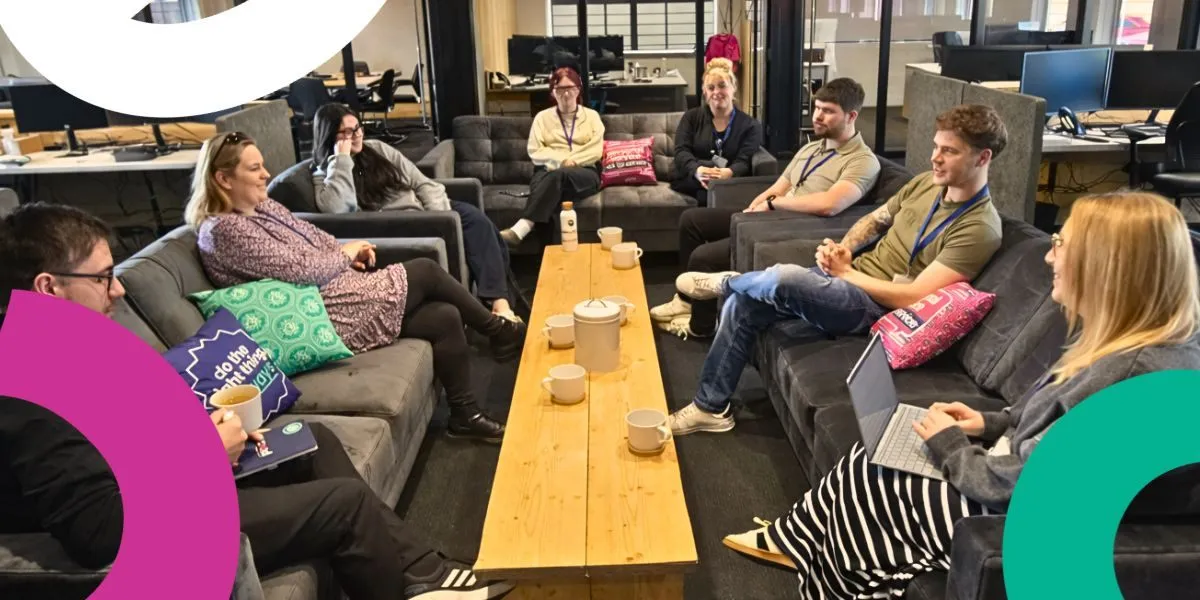
That’s the thinking behind something I introduced a while back that has quietly become one of the most valuable parts of our working day. Every morning, before the emails pile up and the queries start coming in, we gather for what we call our daily sit-down.
It lasts no more than fifteen minutes. There’s usually tea (and often biscuits), and it is such a valuable start to the day for the whole team.
Where the idea came from
I borrowed the concept loosely from agile methodology, the stand-up meeting that software development teams use to stay aligned. But payroll people aren’t developers, and standing up first thing in the morning didn’t feel like us.
So we kept the principle and made it our own. No standing or rigid agenda, just a comfortable seat, a quick check-in, and a moment to feel like a team before the day properly gets going.
Simple as that sounds, the impact has been huge.
What actually happens in fifteen minutes
Each person gives a short update. What are they working on today? Is anything likely to affect a colleague or a client? Are there any blockers they need help shifting?
In payroll, nothing happens in isolation. A pension query, a last-minute client change, a system update, any of these can ripple across the team if people don’t know about them. The sit-down gives everyone that shared awareness before it becomes a problem rather than after.
What I’ve noticed most is how often someone in the room already has the answer to something a colleague is wrestling with. That kind of quiet knowledge-sharing is hard to manufacture. But give people fifteen minutes and a reason to talk, and it happens naturally.
Why being office-based makes this work
At Ascend, we’re proud to be a people-first, office-based team, and that’s not just a phrase we use.
Being physically together means knowledge moves freely. Questions get answered quickly. People who are newer to the team learn by being present in conversations, not just by sitting down with a training manual. And, with new apprentices in our team, this is an invaluable learning opportunity for them.
The sit-down reconnects everyone at the start of the morning and makes sure nobody feels like they’re carrying their workload alone.
As the team grows, that will matter more, not less.
A rhythm that builds across the week
The daily check-in stays consistent, but three days a week, we layer in a little more focus.
Monday is for looking ahead. We talk about what’s coming, any new work in the pipeline, and anything the team needs to know before the week gets underway.
Wednesday is for learning. Payroll doesn’t stand still, and neither do we. We use the mid-week sit-down to share knowledge, talk through legislative changes, and keep our CPD moving in a way that feels like conversation rather than a module to tick off.
Friday is for reflection. We look at what went well, what we’d do differently, and we take a moment to recognise the work the team has put in. That last part matters more than people sometimes realise.
The small things that shape a strong team
I didn’t introduce the sit-down because I read about it in a management book. I introduced it because I knew that in a high-pressure environment, the teams that communicate well are the ones that perform well, and I wanted to build that habit before we needed it, not after something went wrong.
High-performing teams are rarely built through big gestures or dramatic changes. More often, they come together through small, consistent habits that make people feel informed, supported, and connected to the work they’re doing.
The sit-down is one of the smallest things we do. But I’d argue it’s one of the most important.
Sometimes all it takes is fifteen minutes, a comfy chair, a decent cup of tea and a chocolate hobnob.