Holiday Pay
The definitive guide to all things holiday pay
A practical look at one of the most complex areas of UK payroll compliance
Holiday pay sounds straightforward. Give your staff 5.6 weeks of paid leave. But in practice, it’s one of the most fertile grounds for costly tribunal claims, back-pay liabilities, and, from April 2026, enforcement action by the new Fair Work Agency.
The challenge isn’t the entitlement, it’s the calculation. As soon as pay varies, hours fluctuate, or you have workers on irregular or part-year contracts, the rules become considerably more complex. And they’ve been shaped not just by legislation, but by a series of landmark employment tribunal cases that have steadily expanded what employers are required to include.
This guide takes you through everything you need to know – from the practical calculations, the tribunal cases that changed the rules, and the latest compliance requirements.
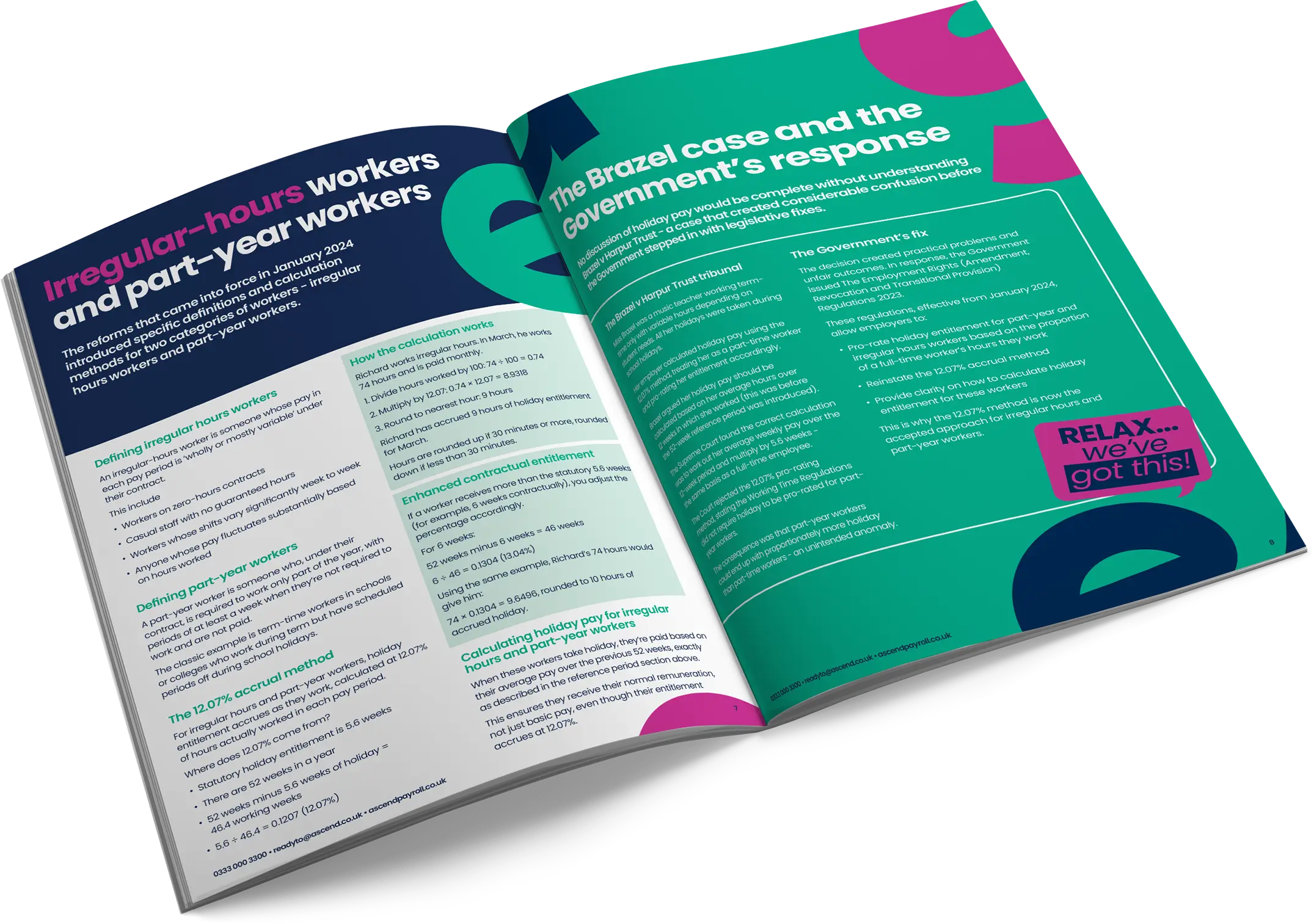
What this guide covers:
- Who is (and isn’t) entitled to holiday pay
- How to calculate holiday pay (from the simple to the complex)
- The 52-week reference period - what to include, what to exclude
- What counts as normal remuneration -overtime, commission, allowances and shift premiums
- Irregular hours and part-year workers, including the 12.07% accrual method
- Landmark tribunal cases and how they have impacted holiday pay legislation
- The Fair Work Agency - enforcement powers and new six-year record-keeping requirements
- How to audit your systems and build a compliant process
- What happens when disputes arise, and how to handle them
Download the guide
Complete the short form below to receive your free copy.