Employee Expenses
A practical guide to getting the tax on employee expenses right
Navigating the minefield of tax and employee expenses
Most employers approach expense management with the best of intentions. An employee spends money on a business trip, the employer pays them back, and everyone assumes nobody owes HMRC anything.
The reality is that every single expense claim must satisfy a strict three-part legal test. Fail any one element of that test, and the whole expense becomes taxable – not just the personal portion, but the entire amount. For the employee, that means an unexpected tax bill. For the employer, it means National Insurance exposure, P11D reporting obligations, and potentially significant retrospective liability.
With the Employment Rights Act 2025 now in force, including six-year record-keeping requirements and the Fair Work Agency operational and empowered to investigate expenses compliance, the risk of getting this wrong has increased considerably.
This guide takes you through the key categories of expenses and tells you exactly what records you need to have in place.
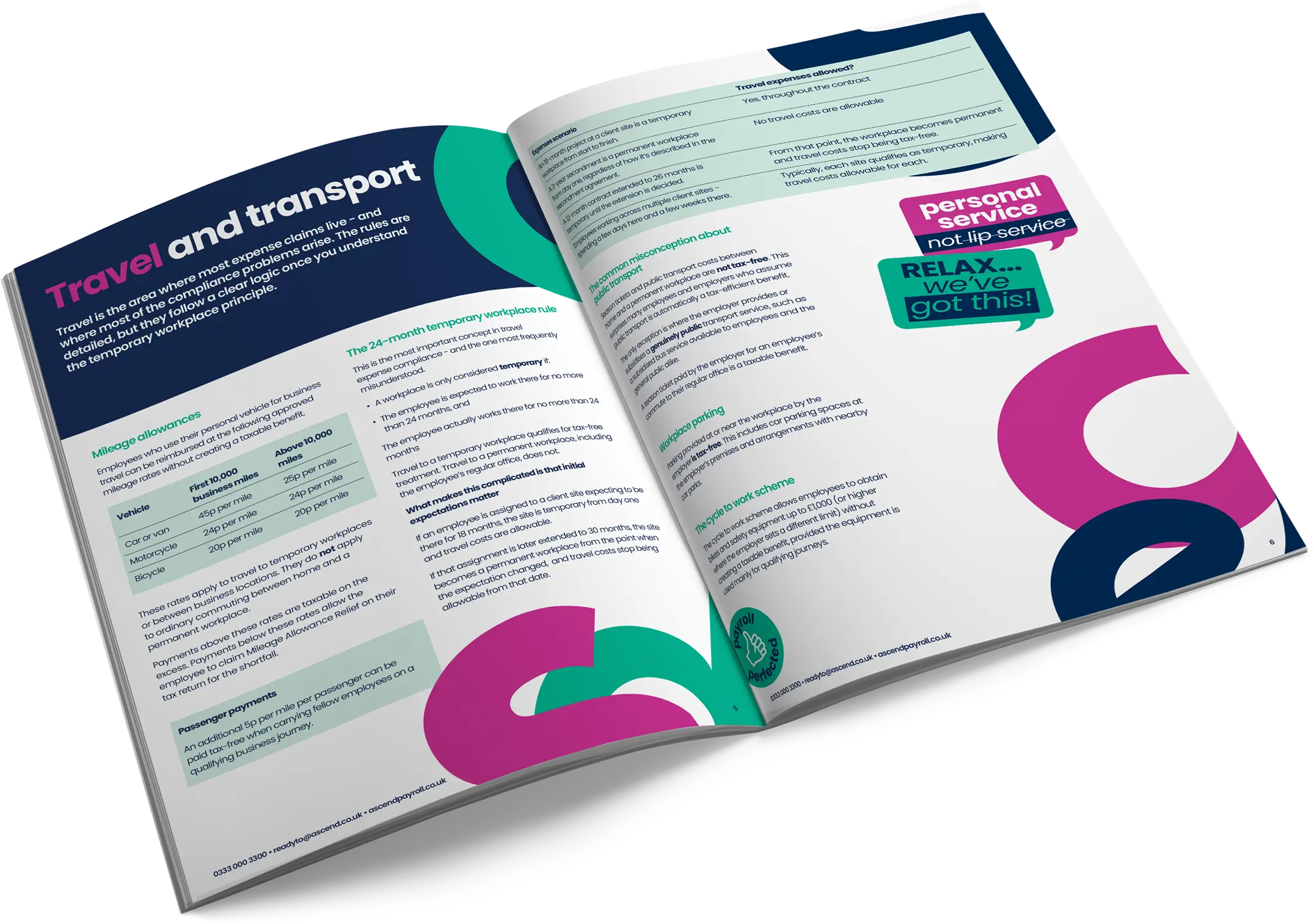
What this guide covers:
- The wholly, exclusively and necessarily test that every expense claim must satisfy
- The consequences of getting it wrong, for employers and employees
- Travel and transport rates and rules
- Accommodation and subsistence rates and rules for UK and overseas travel
- Working rule agreements - an alternative framework many construction employers aren't using
- Professional development, training costs and approved subscriptions
- Technology and equipment, including mobile phones, home working kit, and protective clothing
- Health and welfare benefits: - what's tax-free and what isn't
- What are taxable expenses and benefits
- Miscellaneous exemptions
- Record-keeping requirements and P11D obligations
- Five common mistakes and how to fix them
Download the guide
Complete the short form below to receive your free copy.