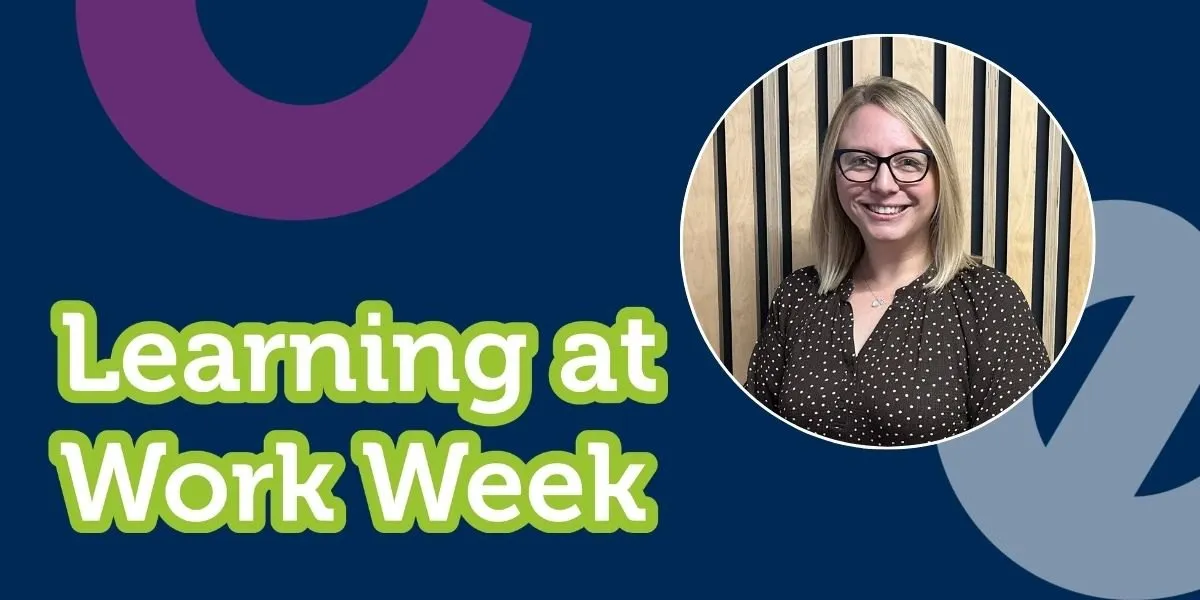

Learning at Work Week is a good moment to stop and think about what learning actually means in practice.
Not just in theory, but day to day, in the middle of a busy payroll operation, whilst juggling multiple clients, hard deadlines, and real consequences when things go wrong.
I’ve spent a lot of time thinking about this. As Head of Payroll Services at Ascend, I am genuinely passionate about developing learning and development opportunities for our team. And one thing I keep coming back to is this – most of the best learning we do doesn’t happen in a classroom.
It happens in the office, in team meetings, in conversations between colleagues, and in the quiet reflection that follows when something doesn’t go to plan.
Learning is not just about qualifications
We absolutely support professional development in the traditional sense. If someone in the team wants to pursue a payroll qualification or a professional certification, we back that – we’ll fund it, enable it, and make space for it.
But payroll isn’t just a technical discipline. It’s also a people discipline. And the knowledge that makes the biggest difference – the kind that comes from experience, from asking the right questions, from watching someone who really knows what they’re doing – doesn’t sit inside a textbook.
That’s something I’ve always believed. And it shapes almost everything about the way we build our team environment.
Learning from each other, every day
One of the biggest advantages of working in a close-knit, in-person team is proximity. When junior colleagues sit near experienced ones, they absorb things. They hear how a problem gets diagnosed. They see the decision-making process in real time. Importantly, they pick up good habits, approaches, and professional
instincts that you simply cannot teach in a training session.
We’re deliberate about this. I want newer members of the team to learn directly from their more experienced colleagues, through day-to-day proximity, mentoring, and hands-on guidance on live work.
That transfer of knowledge, from person to person and across teams, is one of the most valuable things we invest in. It’s also one of the hardest things to replicate if you get the team culture wrong.
When things go wrong, we learn from that too
No payroll operation is perfect. Errors happen, gaps appear, and processes that worked well last year might not be fit for purpose today.
What matters is what you do with that information.
We use a Learn, Fix and Improve (LFI) tracker to make sure nothing gets swept under the carpet. When an issue arises, whether it’s an operational error, a process gap, or an improvement opportunity, it gets logged. We record what happened, what caused it, and what we’re going to do about it.
But the LFI log isn’t just a paper trail. We review it together, as a team, in regular sit-downs. That means learning isn’t siloed. If one person encounters a problem and finds a solution, the whole team benefits. Issues are visible, solutions are shared, and we can evaluate whether the fixes we’ve put in place are actually working.
It also means that when we identify a genuine knowledge gap, for example, a recurring issue or something higher risk, we can address it directly. Through development plans, through coaching, through group sessions. Learning that’s connected to real operational experience tends to stick far better than learning in the abstract.
A no-blame culture makes better learners
None of this works if people are afraid to admit mistakes.
Something I feel strongly about is maintaining a no-blame culture within the team. When something goes wrong, the question isn’t “who did this?”, it’s “what can we learn from this, and how do we stop it happening again?”
That shift in framing matters more than it might sound. When people feel psychologically safe, they raise issues earlier. They ask questions they might otherwise have kept to themselves. They reflect more honestly on their own performance and are more open to feedback.
The result is a team that improves … quickly. Not because we’re soft on errors, but because we’re focused on understanding and prevention rather than blame. And that, in my experience, is where the real learning happens.
Tools that support a learning culture
We also invest in the structures that make continuous learning possible beyond the day job.
We use Small Improvements, an employee engagement and feedback platform, which gives everyone a way to give and receive feedback, set and track goals, and recognise colleagues who are doing good work. The peer recognition element is a small but meaningful way to surface positive behaviours and reinforce the kind of learning mindset we want to encourage across the team.
Regular pulse surveys mean we’re listening to how people are feeling, where they need support, and what’s working. Feedback flows in both directions. I don’t just want to tell people how to improve; I want to create the space for them to tell us too.
Our Daily Sit Down meetings are not just a means to check on the status of the work, we also build in learning opportunities, both informal knowledge sharing, plus a more formal learning session in the Wednesday meeting where our Head of Legislation and Compliance keeps the team updated or delves into a specific subject.
Why it matters beyond our own team
Ascend Payroll is a specialist payroll bureau. The depth of knowledge our team carries is part of what our clients are paying for.
When we invest in learning and development, whether through formal qualifications, LFI reviews, mentoring relationships, or simply building a team environment where knowledge flows freely, we’re ultimately investing in the quality of service we deliver.
A team that learns well is a team that gets better at what it does. And in payroll, where accuracy matters and the stakes are real, that’s not a nice-to-have. It’s fundamental.
So this Learning at Work Week, I’m not celebrating learning as an abstract idea. I’m recognising the processes, tools, and people that make it part of how we work – every week, all year round.