Salary Sacrifice
Compliant and tax-efficient employee benefits
Salary Sacrifice is one of the most powerful tools in payroll - get it right and everyone wins
Salary sacrifice is one of the most effective tools available for structuring employee remuneration. When it works well, it reduces tax and National Insurance for both employer and employee, increases the value of benefits packages, and helps offset rising employment costs.
When it goes wrong, the consequences range from unwitting National Minimum Wage breaches to employees discovering mid-maternity leave that their statutory pay is lower than expected.
With Employer NIC now at 15%, interest in salary sacrifice has never been higher. But neither has the complexity – OpRA rules, the upcoming £2,000 pension NIC cap, statutory payment implications, and the requirement for watertight contractual documentation all need to be understood and managed correctly.
This guide takes you through the fundamentals, the complications, and the practical steps to get it right.
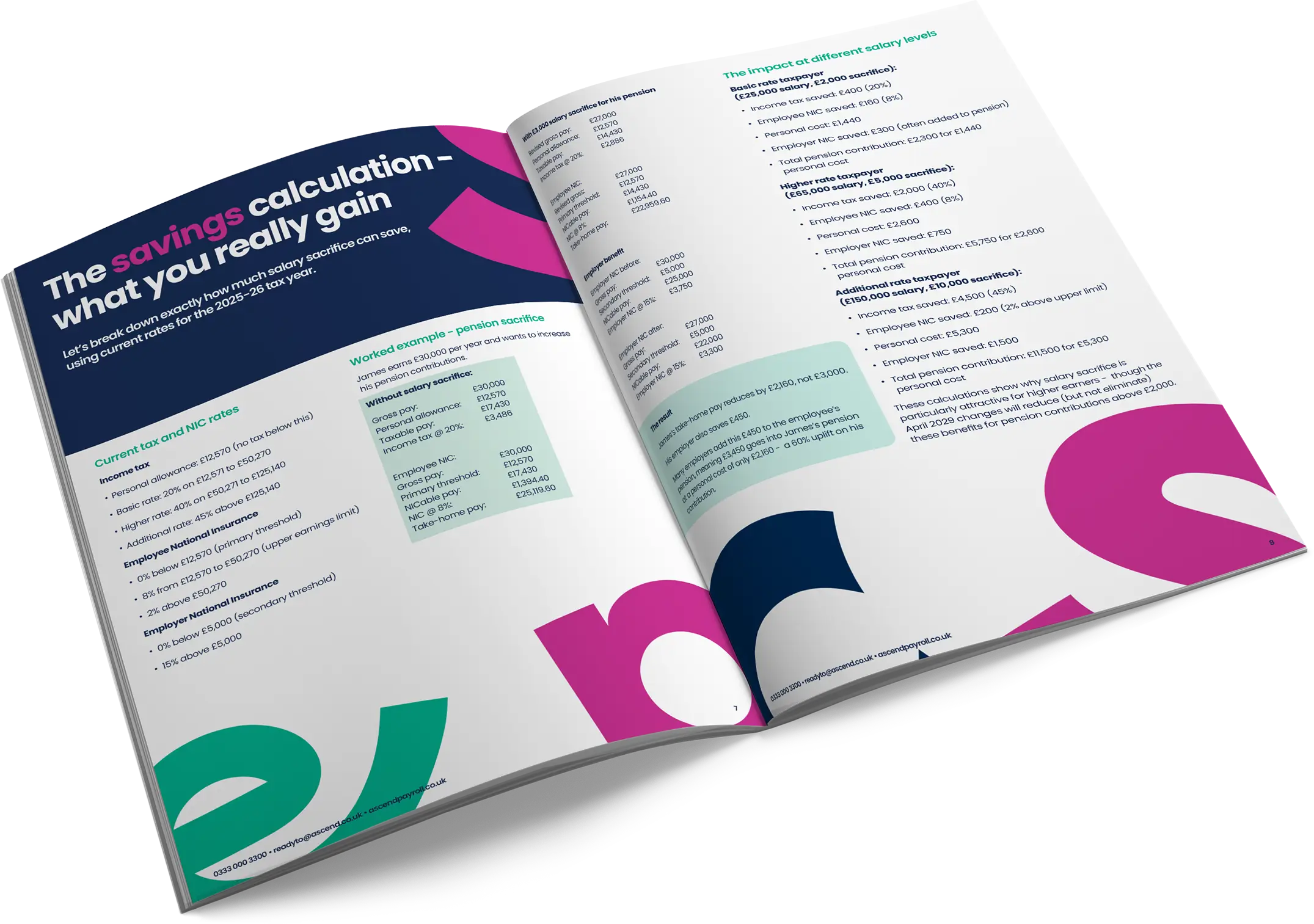
What this guide covers:
- How salary sacrifice works - the mechanics, the contractual requirements, the tax savings
- The benefits worth sacrificing for pensions, electric vehicles, cycle to work
- Benefits caught by OpRA rules, and why many flexible benefit schemes no longer deliver tax advantages
- The April 2029 pension NIC cap - what changes and what doesn't
- National Minimum Wage - the hard limit salary sacrifice can never cross
- The impact on statutory maternity, paternity and sick pay
- How to set up arrangements correctly, with the right documentation
- The five most common mistakes
- What the future of salary sacrifice looks like
Download the guide
Complete the short form below to receive your free copy.