Payrolling benefits in kind
The complete guide to mandatory payrolling from April 2027
The biggest change to reporting benefits in decades
The P11D is on borrowed time.
The annual P11D has been the cornerstone of benefits reporting for decades. From 6 April 2027, that changes. Real-time reporting through the payroll becomes mandatory for the most common benefits in kind, with the rest following from April 2028.
This isn’t just an admin change, it’s a data change. Employers need the value of each benefit before the first payroll run of the tax year, not twelve months later. It also brings a specific cash flow trap and many businesses will face a double Class 1A National Insurance payment in the 2027/28 transition year.
This guide, written by our Head of Legislation and Compliance, Paul Chappell takes you through what payrolling of benefits in kind actually means, how the calculation works in practice, what’s changing and when, the cash flow implications you need to plan for, and exactly what you should be doing today to be ready.
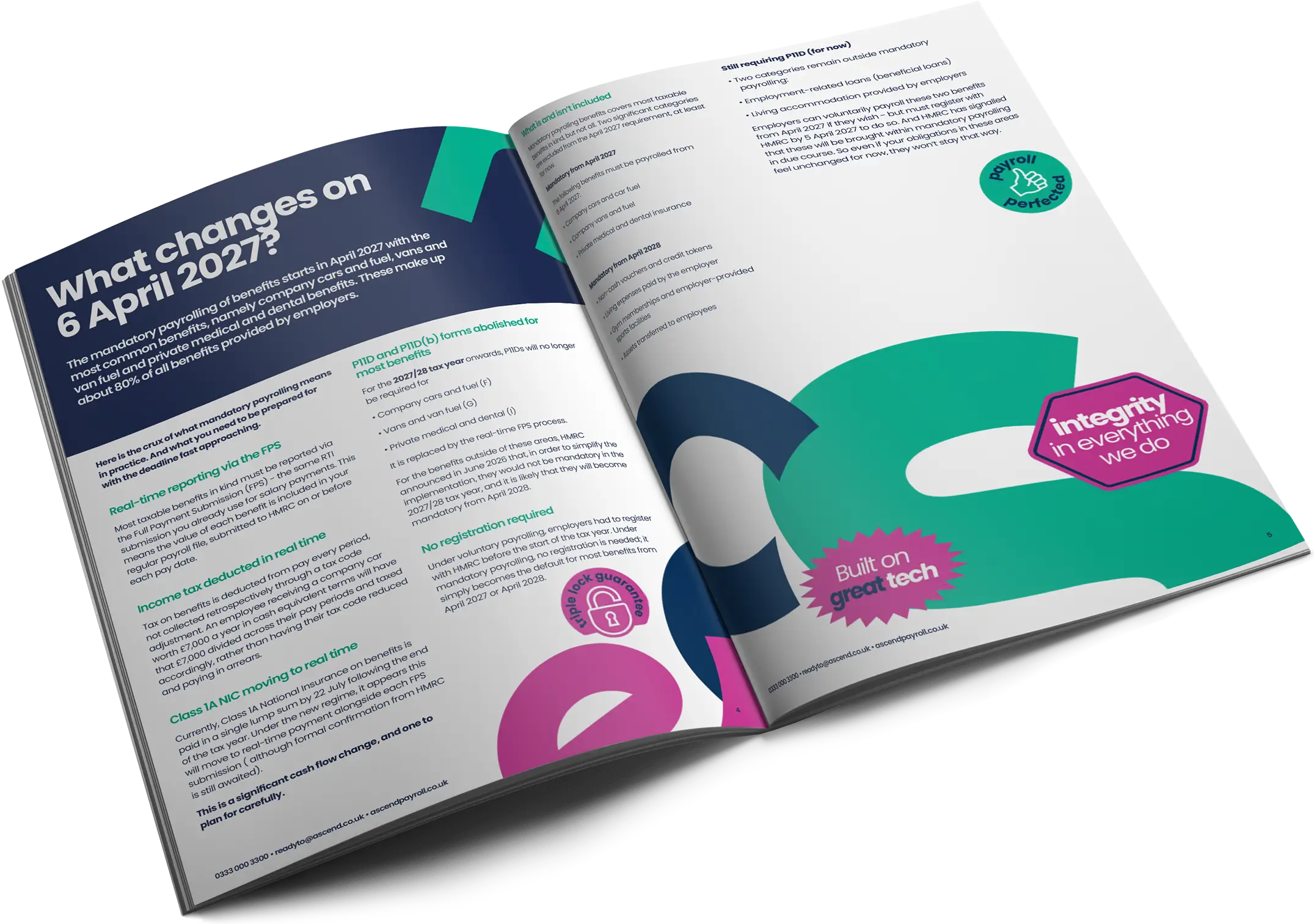
What this guide covers:
- What payrolling of benefits in kind means, and how it differs from the current P11D process
- What changes on 6 April 2027, including which benefits move first
- Which benefits are mandatory from April 2027, which follow in April 2028, and which stay on the P11D for now
- How the calculation works, with a worked example
- What happens when a benefit changes mid-year, or its value is only known as an estimate
- The Class 1A cash flow issue, including the double NIC hit employers will face in the 2027/28 transition year
- What your employees will notice on their payslip, and how to head off their questions
- HMRC's soft-touch approach to enforcement, and why it isn't a reason to delay
- The common mistakes to avoid, and exactly what you need to do now to be ready
Download the guide
Complete the short form below to receive your free copy.