National Minimum Wage
The maximum guide to UK wage compliance
Why the National Minimum Wage is far more complex than it looks
Pay your staff the minimum hourly rate. Simple enough.
Except that what counts as working time extends well beyond clocked-in hours. What you can include in pay is strictly limited. What you can deduct is even more tightly controlled. And the grey areas, such as shadow hours, salary sacrifice, term-time workers, sleep-in shifts, and pre-shift tasks, have produced years of tribunal cases, HMRC investigations, and businesses named and shamed publicly for violations they didn’t know they were committing.
And with the new Fair Work Agency operational, you can be sure that the focus on National Minimum Wage breaches and enforcement will be even greater.
This guide, written by Paul Chappell, Head of Legislation and Compliance at Ascend Payroll, takes you through the full picture, from the basics to the complexities that trip up even the most well-intentioned employer. Understanding the tribunal cases that have shaped the rules and what you need to do to stay compliant.
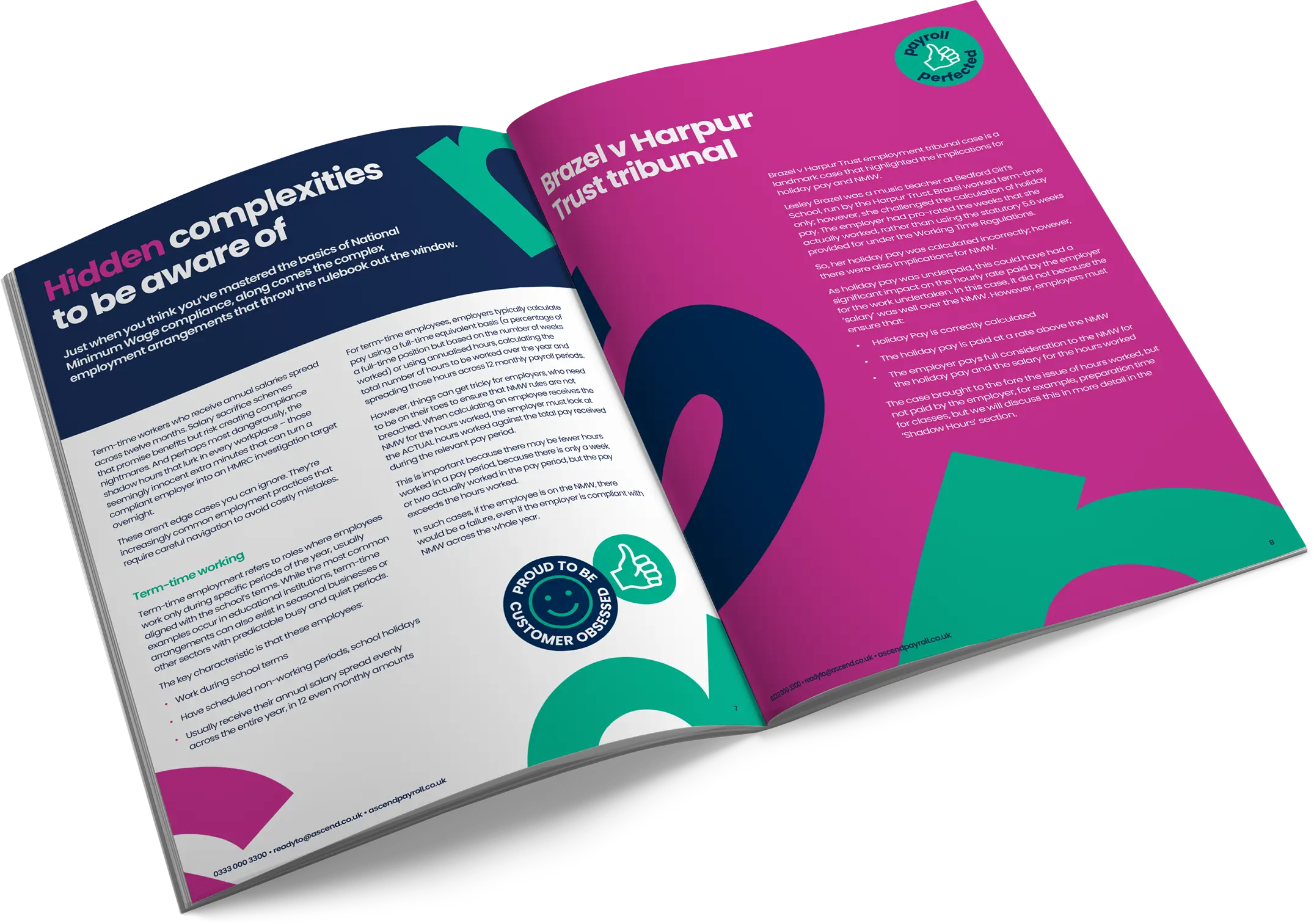
What this guide covers:
- Current NMW rates and bands, and who the legislation applies to
- How working hours are calculated - including what counts and what doesn't
- Which pay elements are included in NMW calculations, and which are excluded
- Shadow hours - what they are, why HMRC is focusing on them, and a worked example
- Term-time workers and the per-pay-period compliance risk
- Salary sacrifice and NMW - where arrangements go wrong and how to prevent it
- Deductions such as uniforms, training costs, admin fees and what the rules actually allow
- Sector-specific pitfalls- in care, security, motor trade, retail and warehousing
- Landmark tribunal cases and what impact they still have on NMW
- HMRC investigations - what triggers them, what to expect, and how to handle one
- Preventative measures that will protect your business
Download the guide
Complete the short form below to receive your free copy.